
Polarized Training Pathway
In collaboration with Dr. Stephen Seiler, the “father of polarized training,” we have curated everything you need to know about the 80/20 training method.
Cycling training is a science and an art. How endurance athletes train, when they train, and the intensity and duration of that training all affect the gains and adaptations they see.
Proper interval execution is essential to see the expected progress. How you analyze and interpret all that data is equally valuable. Of course, training needs to be planned so it fits into any given season, race schedule, and lifestyle. Off the bike, the importance of strength and conditioning is often neglected.
This is training. This process is what athletes live for.
In collaboration with Dr. Stephen Seiler, the “father of polarized training,” we have curated everything you need to know about the 80/20 training method.
Interval workouts are a fundamental part of any endurance training program. Learn exactly what intervals are, why they are so important, and how to properly execute interval workouts with the help of Sebastian Weber, Neal Henderson, and Dr. Stephen Seiler.
We review the art and science of developing and maintaining an annual training plan, which helps athletes progress and perform at their best.
It’s hard to find time to fit in the long, slow miles that traditionally comprise the base season. Coach Trevor Connor offers suggestions for improving life-training balance, understanding quality versus quantity, and more.
Trevor Connor and Chris Case break down the concept of durability—the ability to maintain performance deep into a race or training session, even after hours of fatigue.
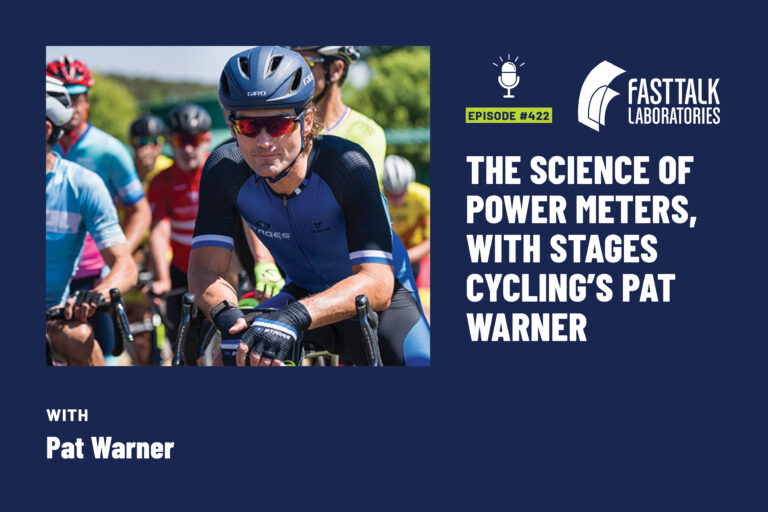
You probably own a power meter, but do you know how it measures power or how these devices have evolved over 20 years? We were joined by Stages Cycling’s head of product development Pat Warner to pull back the curtain on the technology of power measurement.
Who is the greatest endurance athlete of all time? In this clip from our 400th Fast Talk episode, world-leading experts Dr. Iñigo Mujika, Dr. Stephen Seiler, and Prof. Louise Burke debate the greatest endurance athlete in history.
We discuss new research on what it takes to win the biggest races in cycling—and how that can help your own racing—and we analyze a study that looks at the potential causes of overtraining syndrome.
Registered Dietician Andrea Schwartz talks with us about how she works with athletes in-season to hit their weight goals while not getting themselves off-track.
In this week’s potluck episode, we discuss what to do when your racing data isn’t what you’d expect based on the numbers you see in training; we define muscle memory and discuss how it pertains to endurance sports; and we detail the many ways that bikes have become more aerodynamic.
Functional training expert Dr. Stacey Brickson joins us to explain why no other sport movement is like the pedal stroke and, more importantly, why that requires doing additional strength work.
We discuss how to find solutions when you’re dealing with injuries without an obvious cause, then we review new research that demonstrates that changes in progesterone, estrogen, and testosterone do not negatively impact performance in males or females.
Zwift revolutionized indoor training, but they didn’t stop there. We talk with Nick Kalkounis and Ryan Cooper about both the history and future of Zwift’s innovations.
Based on their recent research article, the Seilers discuss the proliferation of training zone systems and compare them to the highly touted Norwegian five-zone model.
Purists say never do efforts on long base rides, but recent research is challenging whether a few efforts really do any harm. More importantly, can doing some neuromuscular work help?
In this week’s potluck episode, we discuss when and how to best use average power from our rides, whether there’s a ceiling to our VO2max capacity, and how we can replicate success from season to season.
Understanding the distinction between training fitness and practicing sport can lead to great overall performance gains.
The truth about base training for time-crunched cyclists—what to cut, what to keep, and what actually moves the needle.
Former elite distance runner Siren Seiler-Viken exposes the truth about focusing on light racing weight: performances will suffer and health will deteriorate.
For our 400th episode we invited three of the most prominent names in exercise physiology to discuss where we are and where we’re going in endurance sports science.
In this week’s potluck episode, we discuss whether there is a true ceiling to our potential, whether there’s a value in “wintering” or taking time off, and what cross training our hosts recommend.
Two new studies challenge common assumptions: intensity may matter more than volume for healthy aging, and triathlete injury patterns aren’t what most coaches would predict. We unpack what this means for training prescription, and why neuromuscular and strength work belong in every plan.