A Deep Dive on Interval Execution
Learn how and why you should select certain intervals, how to integrate them into your training plan, when to do them, and how to properly execute them.
Workshops & Webinars. How-To Videos. Techniques. Workouts.
Library members get access to the Fast Talk Laboratories video library including how-to, training analysis, technique, recorded Q&A sessions, and workout videos from our coaches.

Learn how and why you should select certain intervals, how to integrate them into your training plan, when to do them, and how to properly execute them.
Coaches Trevor Connor and Ryan Kohler review TrainingPeaks metrics such as Acute and Chronic Training Load (ATL/CTL), Training Stress Balance (TSB), and discuss the interactions among the metrics.
Cardiovascular drift is an instability in heart rate and stroke volume over time. We show you how to determine it.
The lab simplifies the path forward for the athlete, showing how the body is responding to training and taking us back to the basics.
To achieve a top performance an athlete must be both physically and mentally prepared. It’s the mental piece that can be the toughest to coach.
How does an athlete’s personality affect how you write their training plans and give feedback? It can be far more varied than you might realize.
Coach Dave Schell talks with Joe Friel about how he gets buy-in from athletes, and creates a dynamic, athlete-centric training plan specific to their individual needs.
Learn from Joe Friel and a handful of master coaches on how to become a more versatile coach, adapting training to the needs of each athlete you work with—from novice to elite.
Dr. Stephen Seiler explains why polarized training is a winning strategy for the long game of endurance sports. By balancing the stress of training, athletes see bigger gains over time.
Scientists have worked closely with athletes and coaches to define the polarized model and explain how it works. Who leads the way? Dr. Seiler talks about the scientific process playing out in valuable ways in both research and the real world.
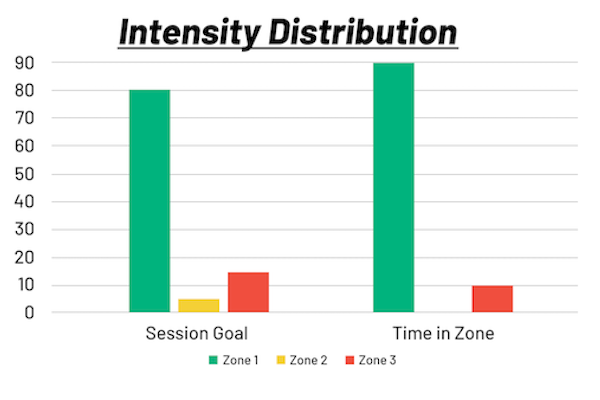
Is 80/20 really the best mix of intensities? And what’s the best way to categorize training? Dr. Seiler has a simple method to get you started.
It can be very easy to train at a moderate intensity all the time, which can be a surefire way to land in an overreached state. Polarized training can help prevent that—and in this video, Dr. Seiler explains how.
Coach and sports nutritionist Ryan Kohler shares his sports nutrition guide for endurance mountain bike races.
Coaches Joe Friel and former pro cyclist Ben Day talk about setting goals and how measuring progress must include “more than just numbers.”
Joe Friel provides an overview of the key training metrics that help coaches quantify training load and plan for performance.
Joe Friel explains the data that helps coaches plan athlete training load while also factoring in recovery.
In this video, Joe Friel discusses how best to bring an athlete to form by striking the right balance between fitness and fatigue. It can be a fine line—and will be different for every athlete.
Joe Friel talks with four-time world champion triathlete turned coach Julie Dibens about how we can use failure and disappointment as an opportunity for growth.
Trevor Connor and Rob Pickels run through one of their favorite sprint workouts, and share some helpful tips and tricks.
Coach Steve Neal helps athletes develop their respiratory systems to improve performance. Find out how the testing works, the limiters it exposes, and what you can do to start training your own breathing.
Rob Pickels shows us how to do mountain bike intervals based on Dr. Seiler’s polarized training research.