
How to Manage Competition Stress
Coach Julie Young explores the science, mental skills, and strategies that help us manage the stress of racing.
Grit. Mental toughness. Resilience.
Fitness isn’t what separates the elites. It’s their ability to suffer, to manage their attitude, and to know when to push and when to pull back.
See what sport psychology methods high-level athletes use and which we can adopt during our own training and racing.
Coach Julie Young explores the science, mental skills, and strategies that help us manage the stress of racing.
The very best athletes are as strong mentally as they are physically. In the Sport Psychology Pathway from Fast Talk Labs, we explore how to build mental skills with experts like Dr. Simon Marshall, Julie Emmerman, Grant Holicky, Lesley Paterson, and Julie Young.
Coach Grant Holicky details the concept of mindfulness, how to attain it, and how it can help performance.
We discuss the underlying principles of an athlete’s psychological welfare, and why our thoughts and feelings are simply emergent properties of brain and nervous system physiology.

Coach Julie Young explores ways to develop mental skills to embrace discomfort as fuel for growth and performance.
Coach Grant Holicky discusses six ways by which all athletes can forge a better relationship with pain as a part of sport.
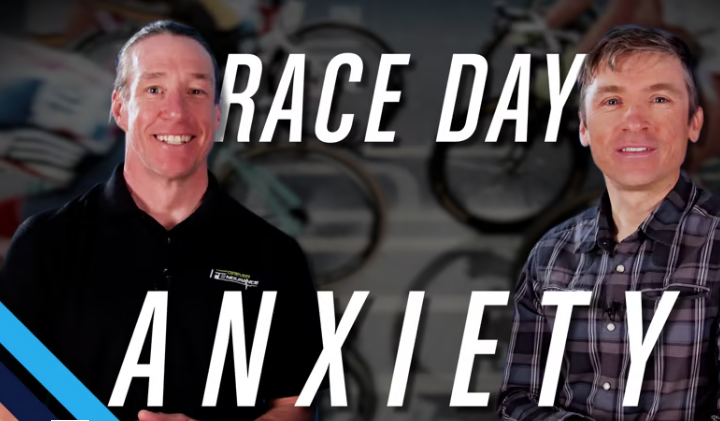
Coach Grant Holicky explains how athletes can better manage anxiety through visualization, routine, and reframing.
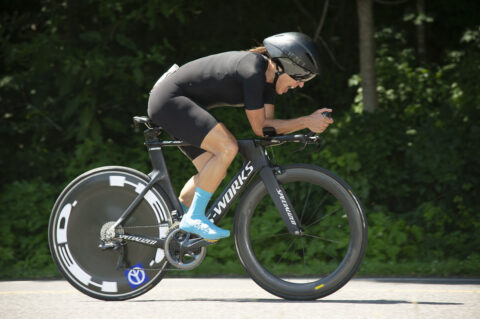
Janis Musins helps us answer questions on time trial pacing, TT position, INSCYD testing, and the coach-athlete relationship.
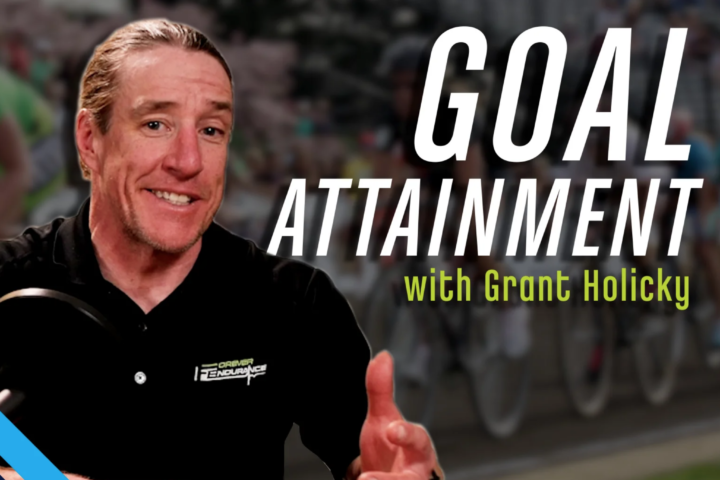
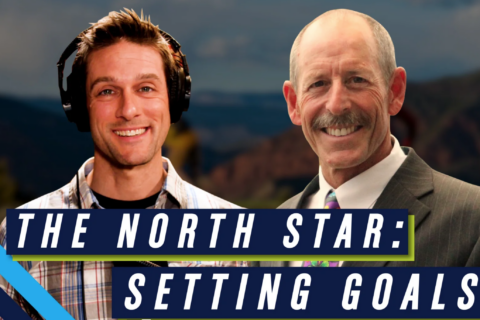
Coach Grant Holicky discusses the critical process by which goals are created, and also the method by which they are achieved.
We discuss the underlying principles of an athlete’s psychological welfare, and why our thoughts and feelings are simply emergent properties of brain and nervous system physiology.
We address questions on how to train grit for race situations, if you can safely override the central governor, and training for a five-day stage race.
We explore how athletes can evolve and find more fulfillment from their sport with pro cyclist Lachlan Morton
Coach and author Will Murray joins Coach Ryan Kohler for a discussion of what makes a useful set of goals, how to develop them, the psychology of goals, and much more.
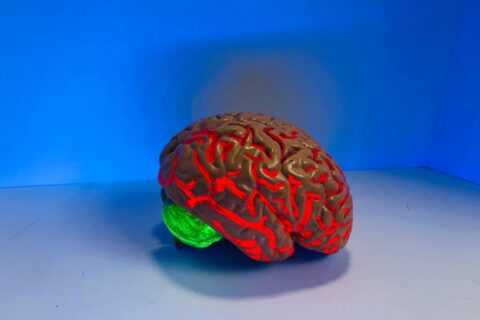
Concussions and traumatic brain injuries are far too common in cycling. We define the causes, effects, management, and preventative measures.
Endurance sports journalist Alex Hutchinson joins Fast Talk Labs to help explain teleoanticipation and pacing.
Physiological improvements are not the only way to maximize performance. Dr. Cheung explores the psychology of feedback, deception, and perception.
Pick a flat or mostly flat terrain, start biking, then listen to Colby Pearce’s moving meditation podcast to relax and think deeply as you ride.
What’s better: a bigger engine or one that’s tuned for a specific goal race? USA Cycling’s performance director Jim Miller shares his training philosophy.
Colby and his former athlete Lydia Tanner discuss her eating disorder and how it affected her training, then her recovery.
We provide the psychological tools that will help both with uncertain circumstances in life (like a pandemic) and with addressing the emotional rollercoaster that is bike racing.
What is confidence? What is resiliency? What is pressure, and how can we better handle it? These are some of the questions we tackle in today’s episode.
Mindset in cycling, especially racing, is an important and frequently neglected side of our training. Mindset is often all that separates the best from second best and can be the difference between reaching the podium or finishing a race.