Polarized Training Pathway
In collaboration with Dr. Stephen Seiler, the “father of polarized training,” we have curated everything you need to know about the 80/20 training method.

Cycling training is a science and an art. How endurance athletes train, when they train, and the intensity and duration of that training all affect the gains and adaptations they see.
Proper interval execution is essential to see the expected progress. How you analyze and interpret all that data is equally valuable. Of course, training needs to be planned so it fits into any given season, race schedule, and lifestyle. Off the bike, the importance of strength and conditioning is often neglected.
This is training. This process is what athletes live for.
In collaboration with Dr. Stephen Seiler, the “father of polarized training,” we have curated everything you need to know about the 80/20 training method.
Interval workouts are a fundamental part of any endurance training program. Learn exactly what intervals are, why they are so important, and how to properly execute interval workouts with the help of Sebastian Weber, Neal Henderson, and Dr. Stephen Seiler.
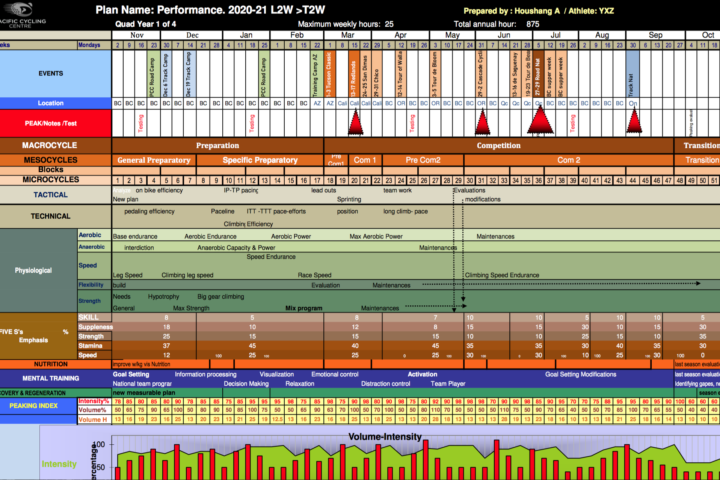
We review the art and science of developing and maintaining an annual training plan, which helps athletes progress and perform at their best.
It’s hard to find time to fit in the long, slow miles that traditionally comprise the base season. Coach Trevor Connor offers suggestions for improving life-training balance, understanding quality versus quantity, and more.
Dr. Stephen Seiler speaks at the Aspire Academy on why and how to monitor athlete training loads.
We bring you our favorite conversations with exceptional guests from the worlds of physiology, medicine, nutrition, sports psychology, and, of course, cycling.
Dr. Stephen Seiler shares the “holy trinity” of training feedback in this live presentation at a rowing conference.
Head Coach Ryan Kohler, Coach Trevor Connor, and Chris Case field questions on how to best execute 4×8-minute intervals, tips on creating micro training camps, and much more.
Dr. Seiler presents on the topic of training intensity when using polarized training.
Certain physiological gains only happen after years of development. We discuss how to design training plans that look two or more years ahead.
Dr. Stephen Seiler presents the reasons, methods, and benefits of moving from a polarized training template to a more personalized, optimized training method that is still based on polarized training.
Many athletes worry that they will lose fitness if they skip too many days of training. While detraining does occur over time, there are also many benefits to taking a break.
We believe modern coaching doesn’t optimally fulfill the needs of the modern athlete. That’s why we’re introducing our community, education, and coaching membership, Fast Talk Laboratories.
Coach Trevor Connor and Coach Ryan Kohler walk through their process for interpreting 5×5-minute interval workout sessions in TrainingPeaks.
Grant Holicky breaks down the best cyclocross skill drills to upgrade your ‘cross racing with the help of some highly qualified riders.
Reducing cardiovascular drift and increasing fiber recruitment are key components of sustainability.
Why do we sometimes ride our best during fatigue weeks, or struggle during a recovery week? Learn the signs you should look for during your peak, recovery, and at the end of big training blocks.
Trevor Connor revisits the fundamentals of aerobic versus anaerobic pathways, and helps us understand more advanced principles of interval training.
We catch up with our friends at The Pro’s Closet, Spencer Powlison and Bruce Lin, to discuss their recent four-week Strava PR Challenge. In the lead up to their attempts, we helped them with training advice and “race-day” strategy tips.
How do you, as an athlete, combine your understanding of sport science and your training and racing experience to most effectively map out your training? That question is the basis for today’s episode, one in which we drift between the philosophical and the practical.
In this episode we look at the big picture when it comes to training in zones, or ranges, versus training a target number. Because what number is best?
Maintaining strong training on the bike while aging isn’t as difficult as it may seem, as guest MTB champion Ned Overend illustrates.
We will delineate what age effects truly exist — for example, a drop in maximum heart rate — and others that have been traditionally attributed to aging that now appear to be trainable, such as a loss in fast-twitch muscle fiber strength.